

Swing Analysis Using Video—Is It Worth It or Not?
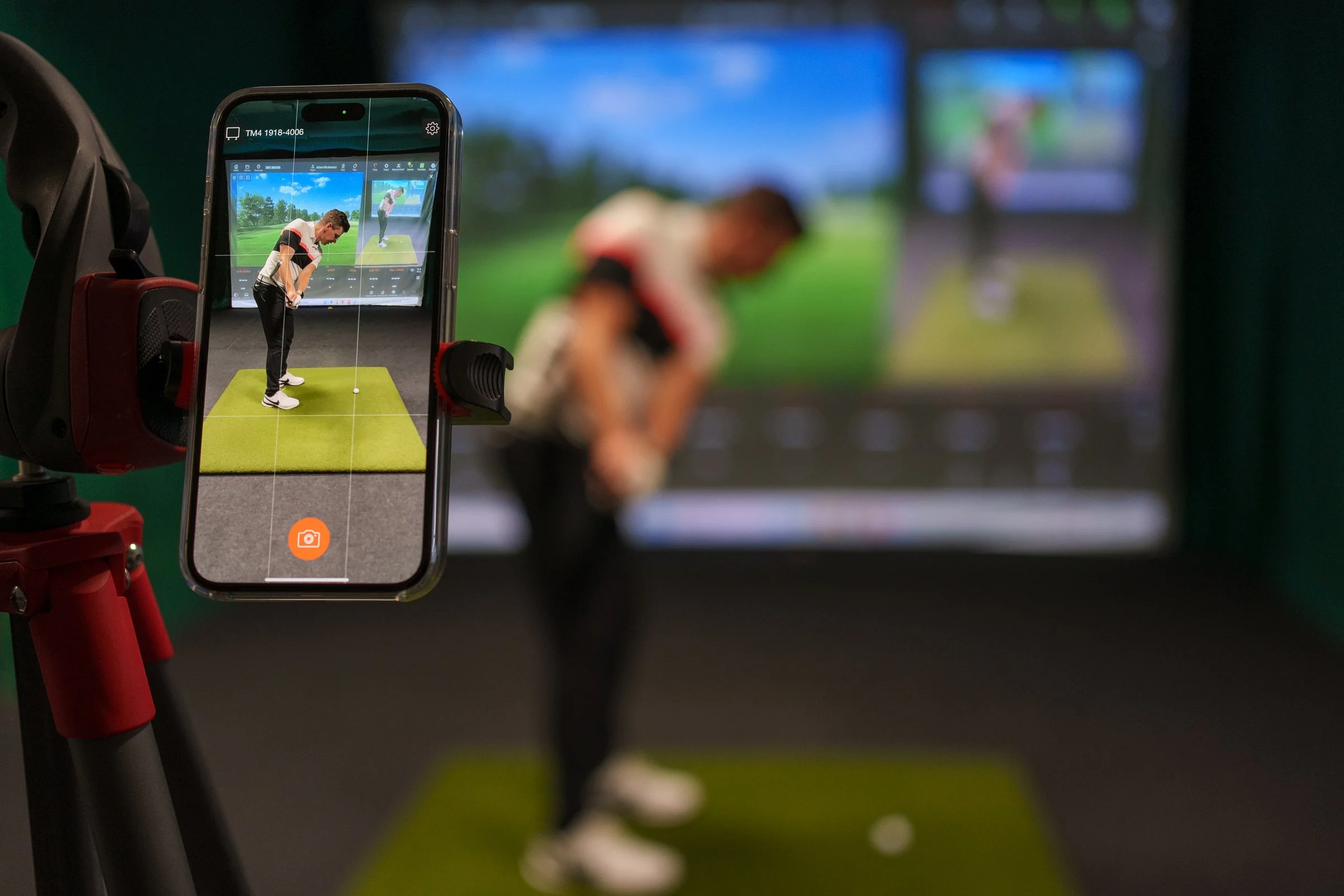
Video swing analysis is one of the most effective training tools in golf. The program automatically plays back the footage in slow motion, allowing you to see every detail of the movement—from the initial backswing to the moment of contact with the ball. It’s as if someone had frozen time and let you analyze every phase of the swing.
What you feel isn't always what you're actually doing. Many golfers are convinced that their swing looks correct, but video footage reveals that their hands, hips, or head are moving differently than they appear to. This makes it easier to understand why the ball isn't going where it should.
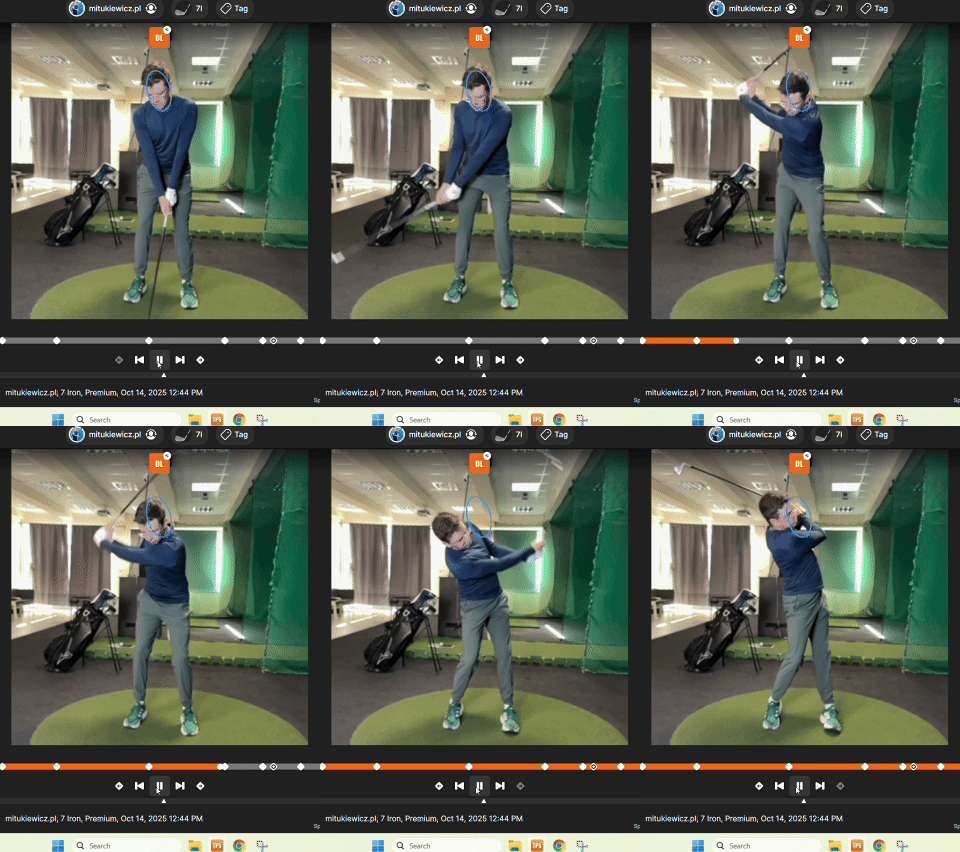
Example #1: Head Position
The circle indicates the position of the head before the swing begins. If, at the moment of impact or after impact, the head is behind this circle, it is most likely that the body’s weight remained behind.
Recording your mistakes is the first step toward correcting them. The camera will capture the little details that the human eye misses—whether it’s a backswing that’s too flat, an unnecessary head movement, or not enough hip rotation. The sooner you see what needs improvement, the sooner you can work on it.
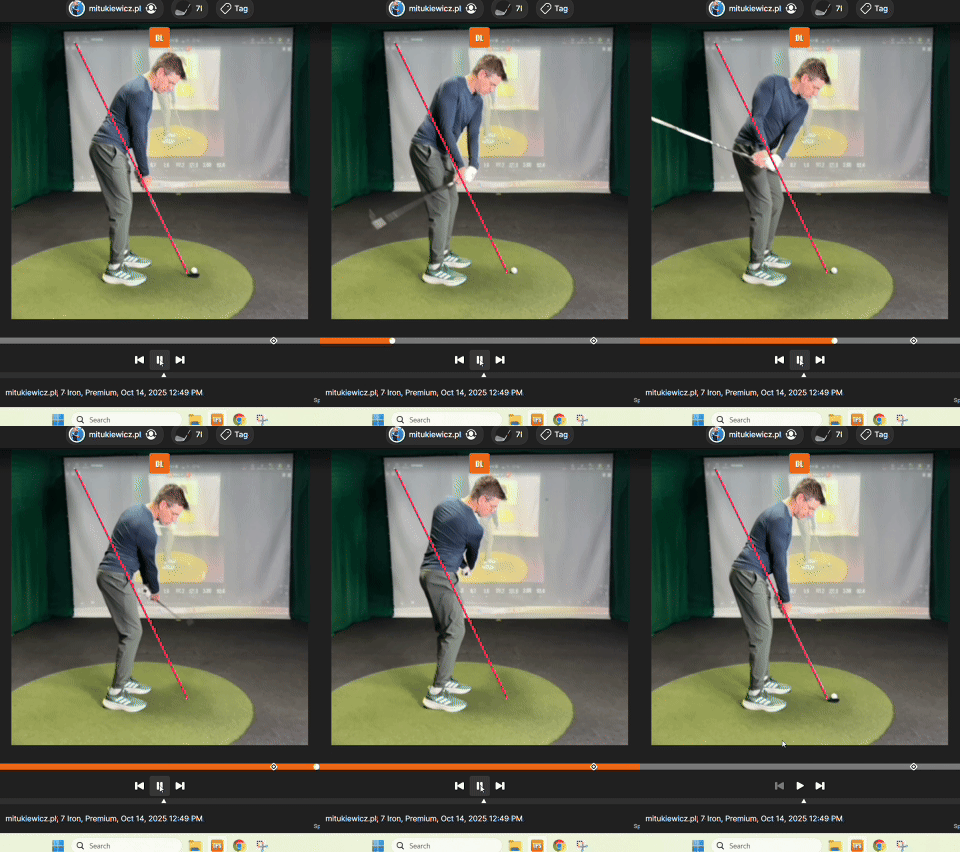
Example #2: Plane of swing
The shaft line at address defines the swing plane, which is extremely important in the short game. If the clubhead moves below this line, it’s difficult to make consistent contact.
You can compare your swing to a model swing. Professional software lets you compare your swing to those of the best golfers. This is a great opportunity to see where the differences lie and how you can get closer to their form. Of course, the point isn’t to copy someone else’s swing at all costs, but it’s helpful to have a point of reference.
Adjustments aren’t always immediately visible. When you make small changes to your swing, you probably won’t see a difference in the footage. It’s only when you exaggerate the “new” movement or overemphasize the change that you’ll notice a difference in the footage. This is extremely important to ensure that you’re actually making changes.
These recordings are your personal record of your progress. By collecting footage from each training session, you can compare your past swings and see how much you've improved. It's an incredible source of motivation to keep working.
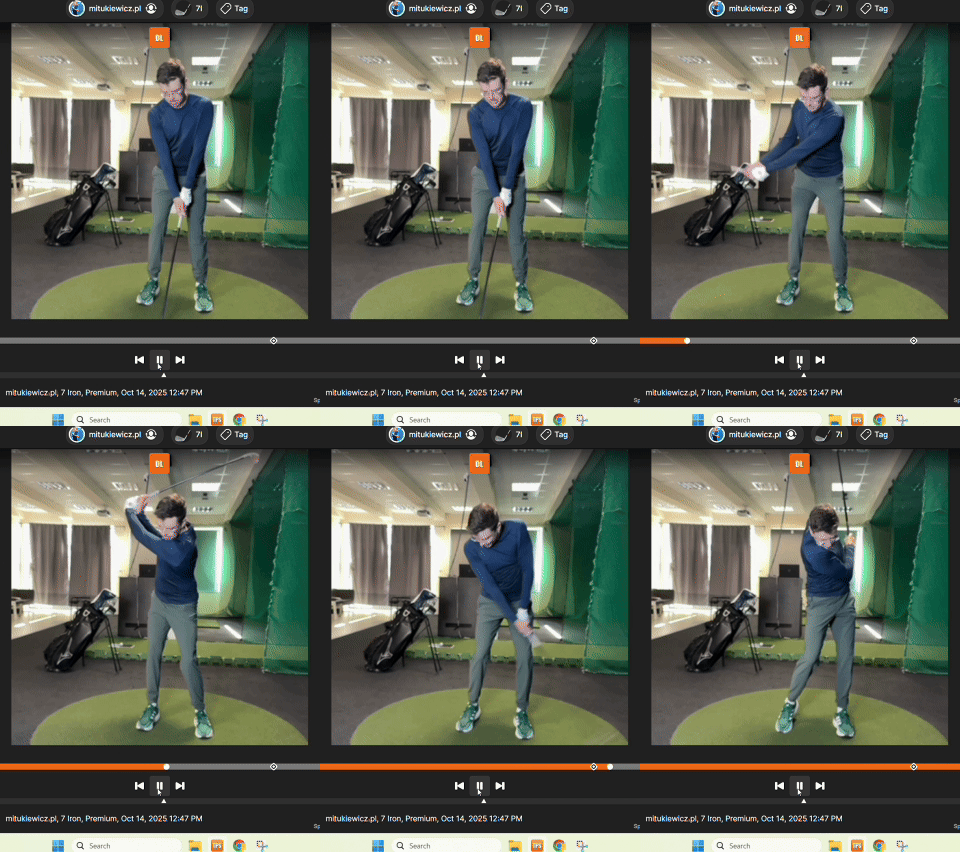
Example #3: Hands straight?
Do you keep your arms straight after the swing, or is that just what you think? Drawing energy toward yourself instead of projecting it toward the target not only reduces distance but also increases the risk of injury.
But it's worth remembering that a camera won't show everything. Video analysis doesn't capture the pace, fluidity, and rhythm—and these factors often determine the quality of a shot.
You won't see muscle tension or grip strength on the screen. These are factors that greatly influence ball control, and they require the coach's intuition and observation.
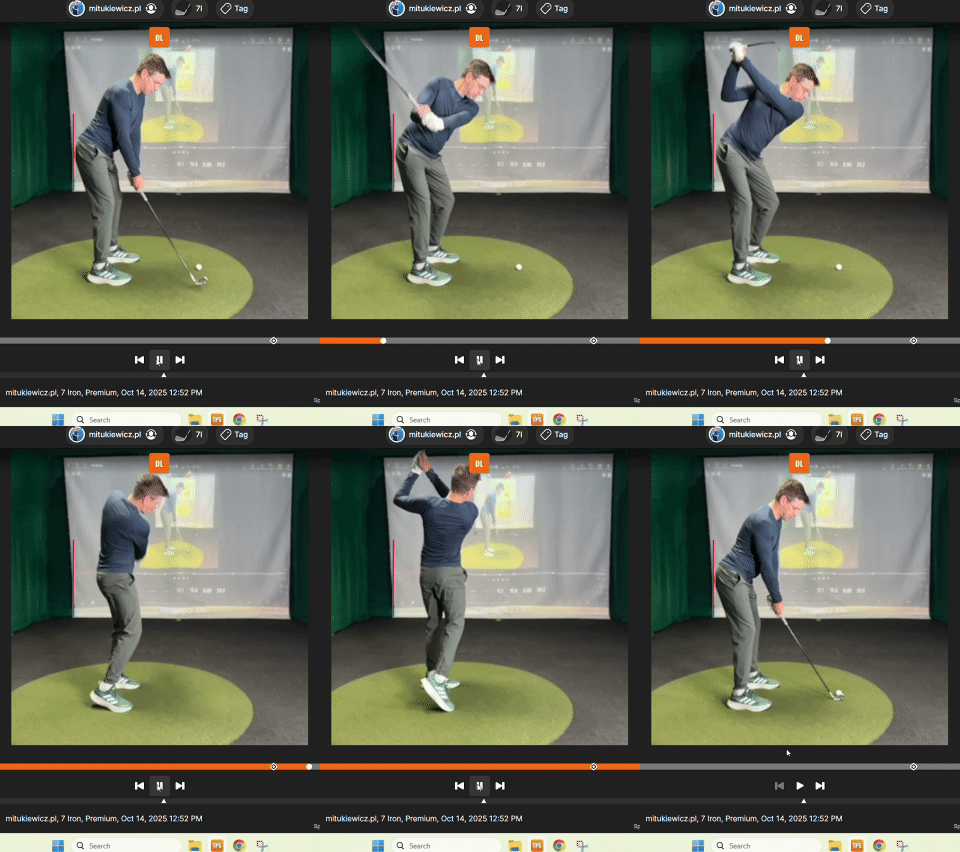
Example #4: Early extension
When I take my stance, my buttocks touch the red line behind me. If I move away from that line at the moment of impact, I straighten my body, which can cause problems with contact.
However, it’s easy to fall into a trap: focusing solely on mistakes instead of cultivating the good aspects of your technique. It’s just as dangerous to look only at the appearance of your swing —after all, in golf, what matters most is the effectiveness of the shot, not the aesthetics of the movement itself.
That’s why video analysis is a powerful tool, but it’s most effective when used under the guidance of a golf coach. The camera footage is one thing, but getting the right guidance on what’s important and what isn’t—and how to apply that knowledge on the course—is another.
Since all the best players in the world regularly use video analysis, maybe there's something to it…?