

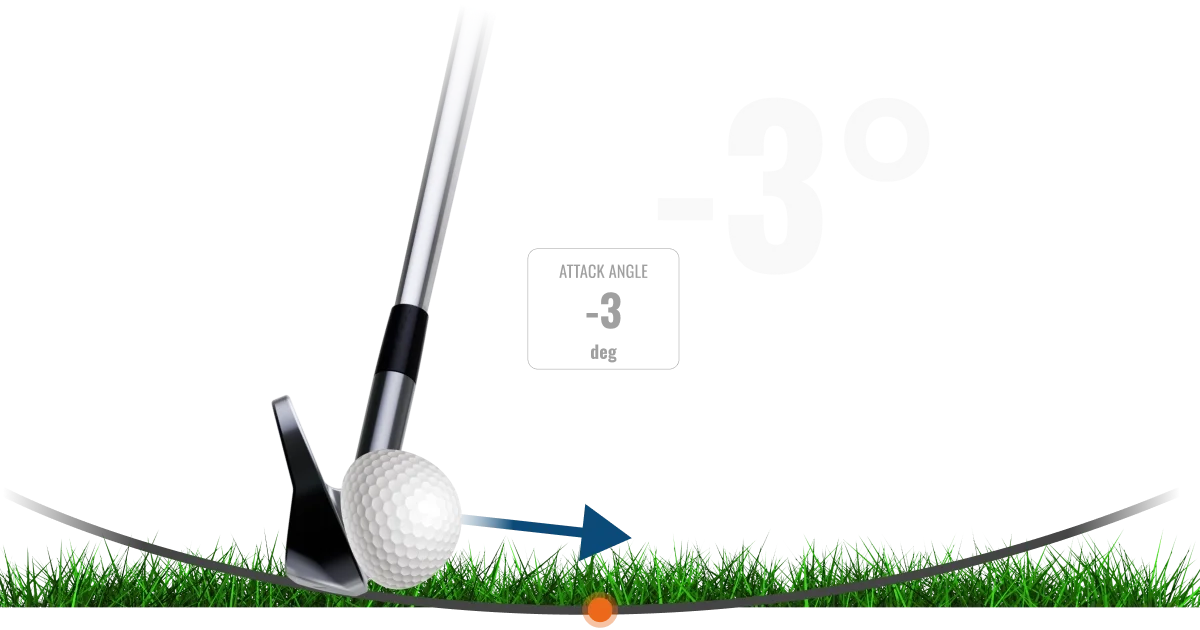
The definition isn't very intuitive— the attack angle is the vertical direction of movement of the geometric center of the clubhead at the point of maximum compression (impact) with the golf ball, measured relative to the horizon.
It sounds like the manual for a space rocket. But what does that mean in practice?
In every golf swing, the clubhead moves down, reaches its lowest point, and then moves back up. There’s no other option— down, lowest point, and up.

Only three options:
Pink - the clubhead moves downward
Blue - the clubhead is at its lowest point
Lime - the clubhead moves upward

If the club hits the ball as it moves downward, the angle of attack is negative.
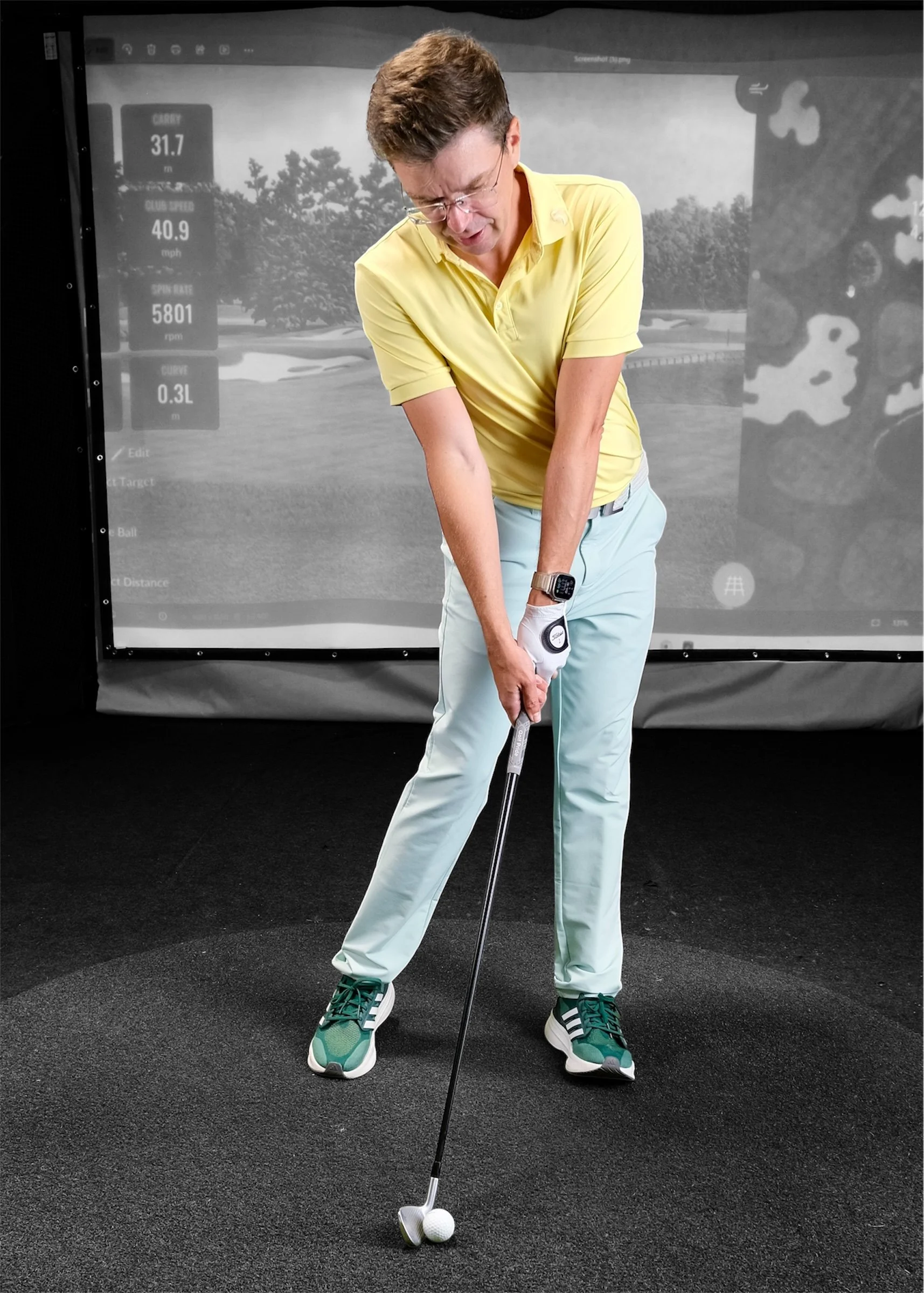
When we hit the ball at its lowest point, the angle of attack is zero.
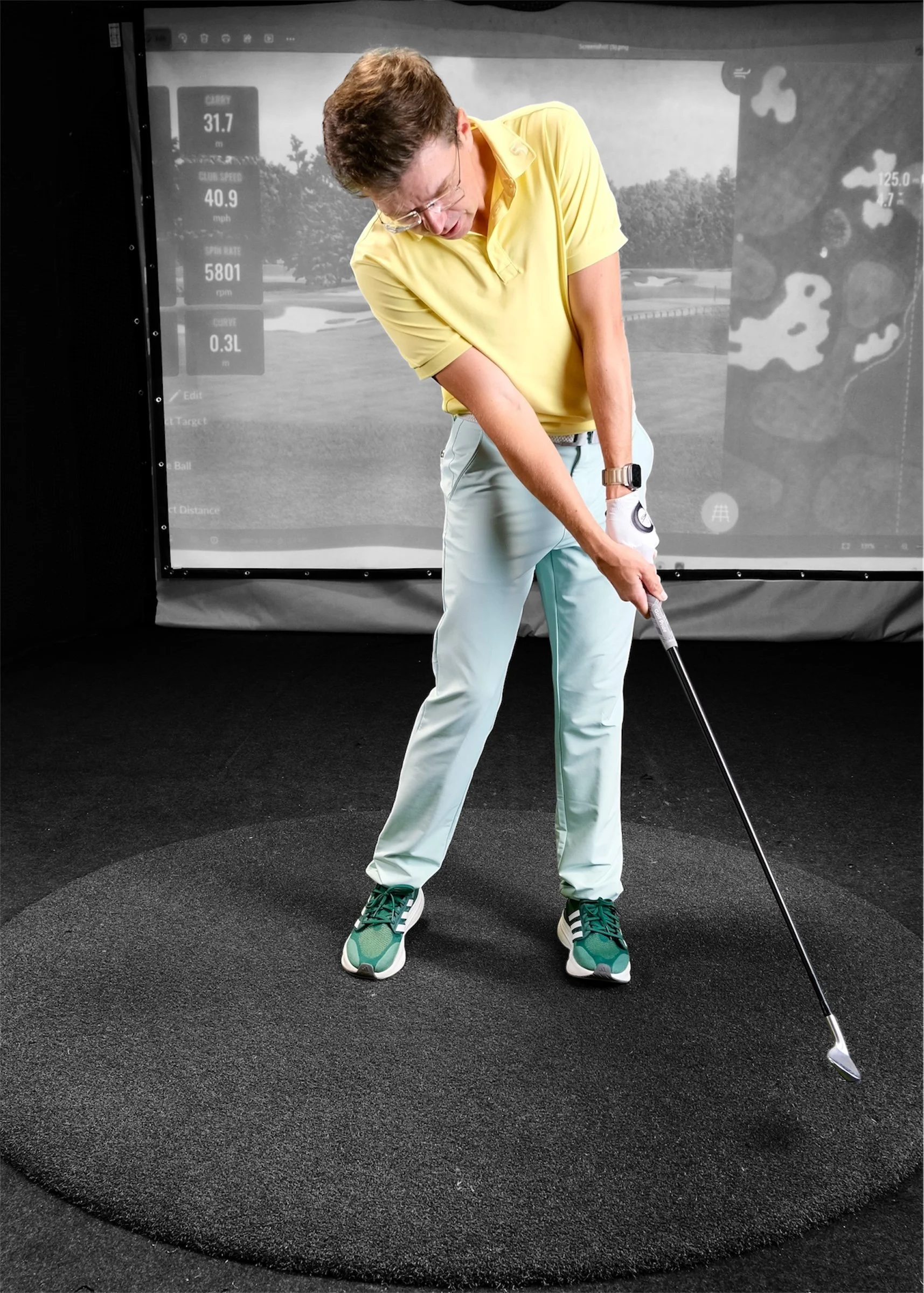
On the other hand, when the clubhead is already moving upward and makes contact with the ball, the impact is positive.
There is no single ideal value, as it depends on the club we’re using, the speed of our swing, and other individual swing characteristics. Nevertheless, take a look at the average values for this angle among professionals:
PW: -4.7
7-iron: -3.9
Hybrid 3: -2.4
To put it simply, a negative loft angle makes it easier to compress the ball, facilitates good contact, and provides the right amount of backspin and flight height.
In contrast, when hitting with a driver, a positive loft angle increases the chance of greater distance, mainly by facilitating a higher ball launch and less backspin, allowing the ball to stay in the air longer.
Note that the sentences above include the phrases “makes it easier” and “increases the chance”... so it won’t solve all the world’s problems (and especially not those in our swing), but we can’t do without it!
Check out the most common mistakes golfers make:
Error #1: irony - positive angle of attack
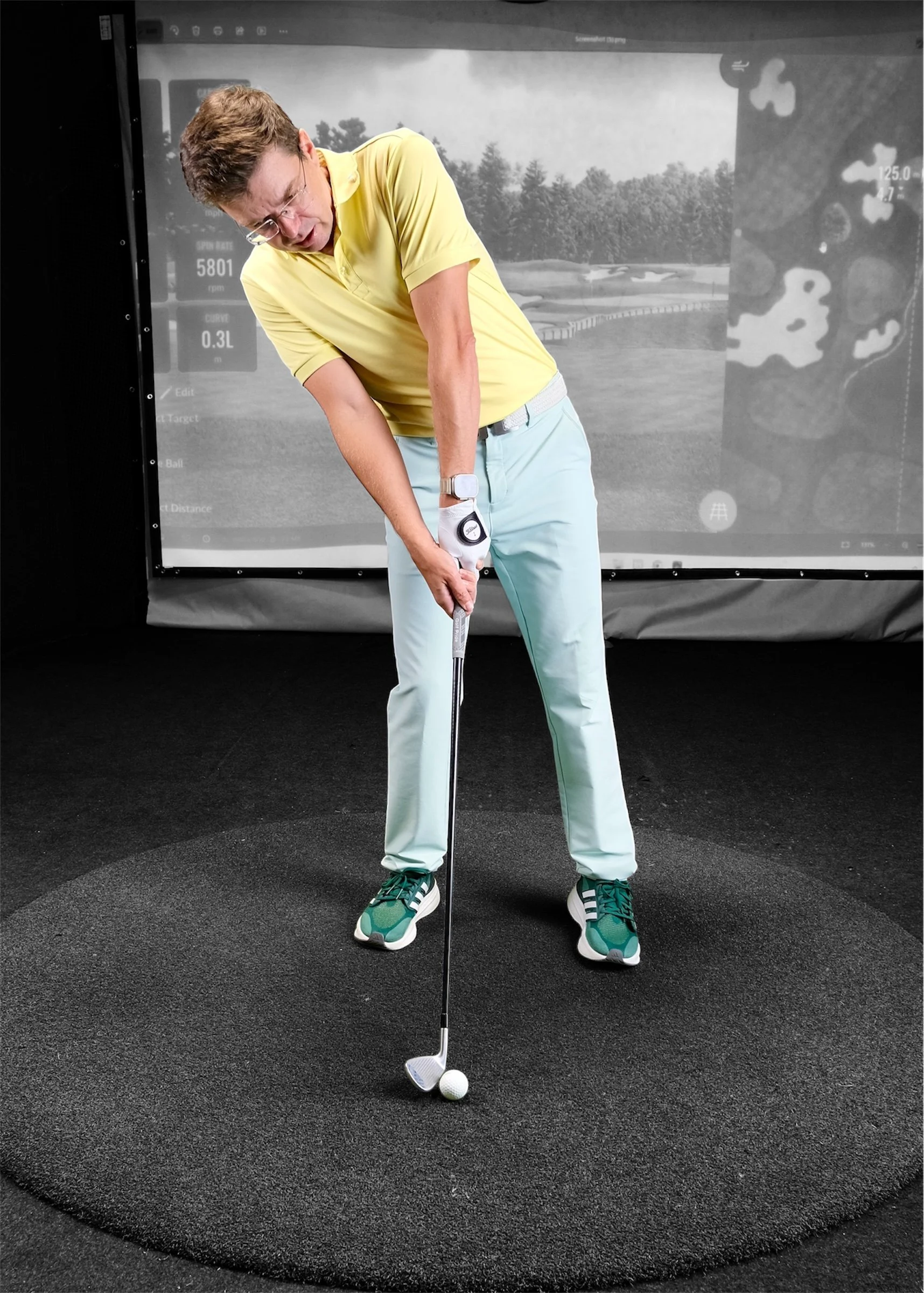
At the moment of impact, too much of your body weight is on your right foot. In this situation, the club will hit the ground too early, bounce off, and strike the ball as it rises upward.

The correct stance means putting more of your body weight on your left foot at the moment of impact. This ensures that the club hits the ball first and the ground second.
Error #2: Irony - Positive Angle of Attack

If you try to “lift” the ball so it goes up into the air, you’ll release your wrists too early, and the club will make contact on the upswing.

The club is designed so that the ball flies upward—you don't need to help it! At the moment of impact, your hands should be in front of the ball.
Error #3: irony - positive angle of attack

If the ball is positioned too far forward, your entire body “lags behind the ball.” This is the ideal position for the club to strike the ball at a positive angle of attack.

As a starting point, a good position for the ball is to place it at the height of the buttons on your shirt.
Error #4: Driver - Negative Angle of Attack
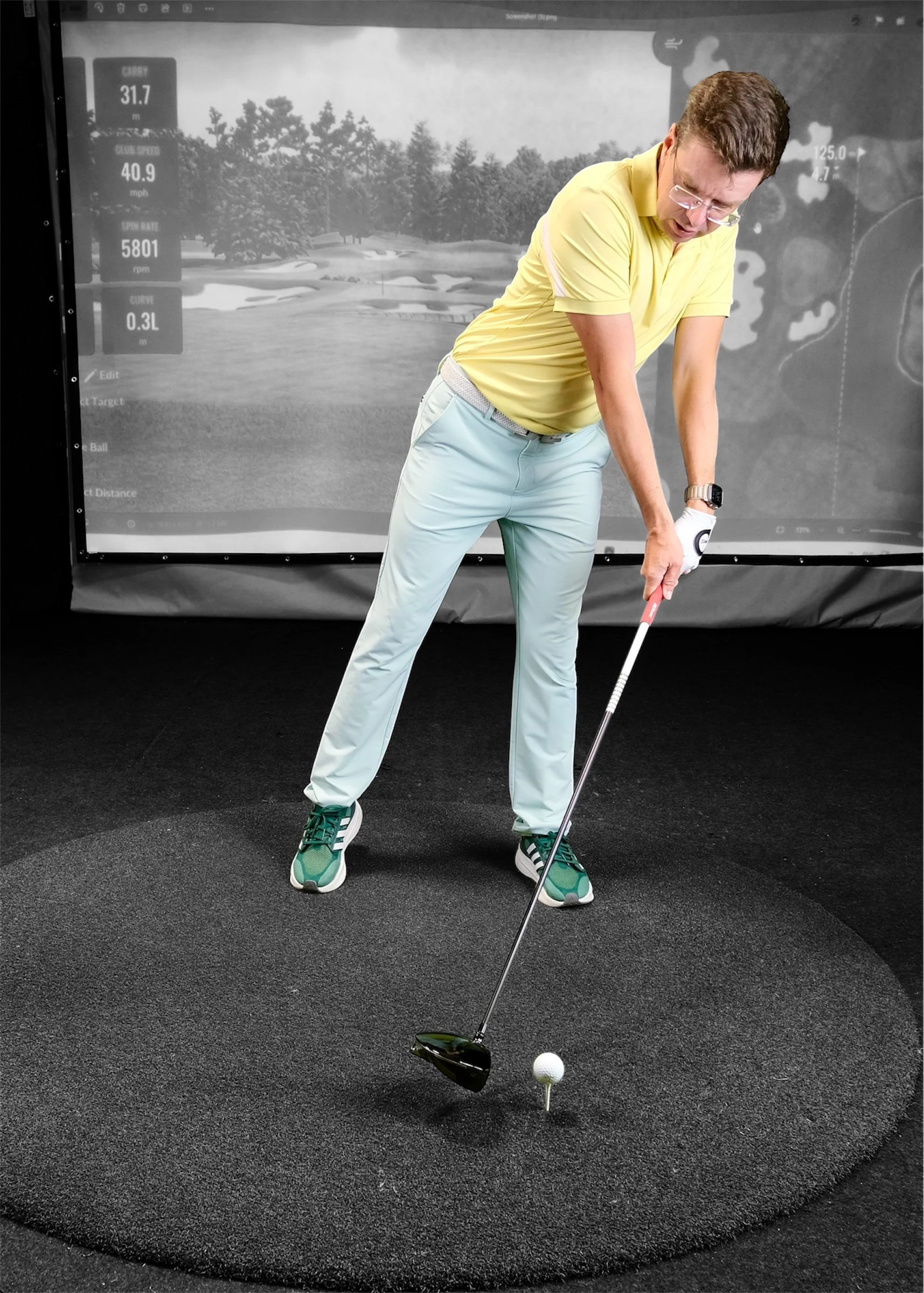
Golfers who want to hit the ball far often shift their weight to their left foot (which is good!) while at the same time leaning their chest over the ball (which isn't so good!). This is the perfect stance for hitting the ball “downward.”
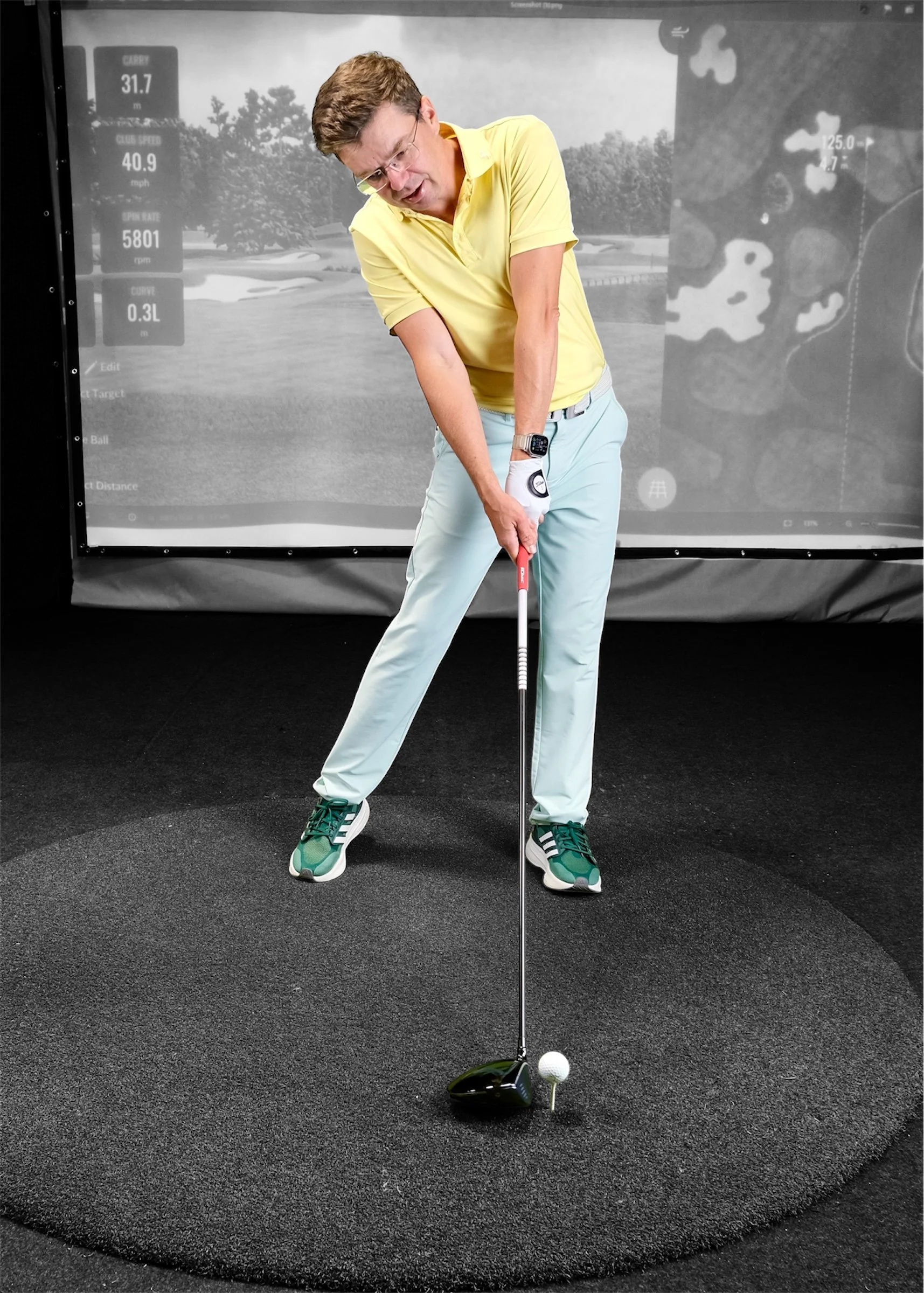
At the moment of contact, your body weight should be on your left foot, but your chest should be turned away from the target (with your head ahead of the ball).
Error #5: Driver - Negative Angle of Attack
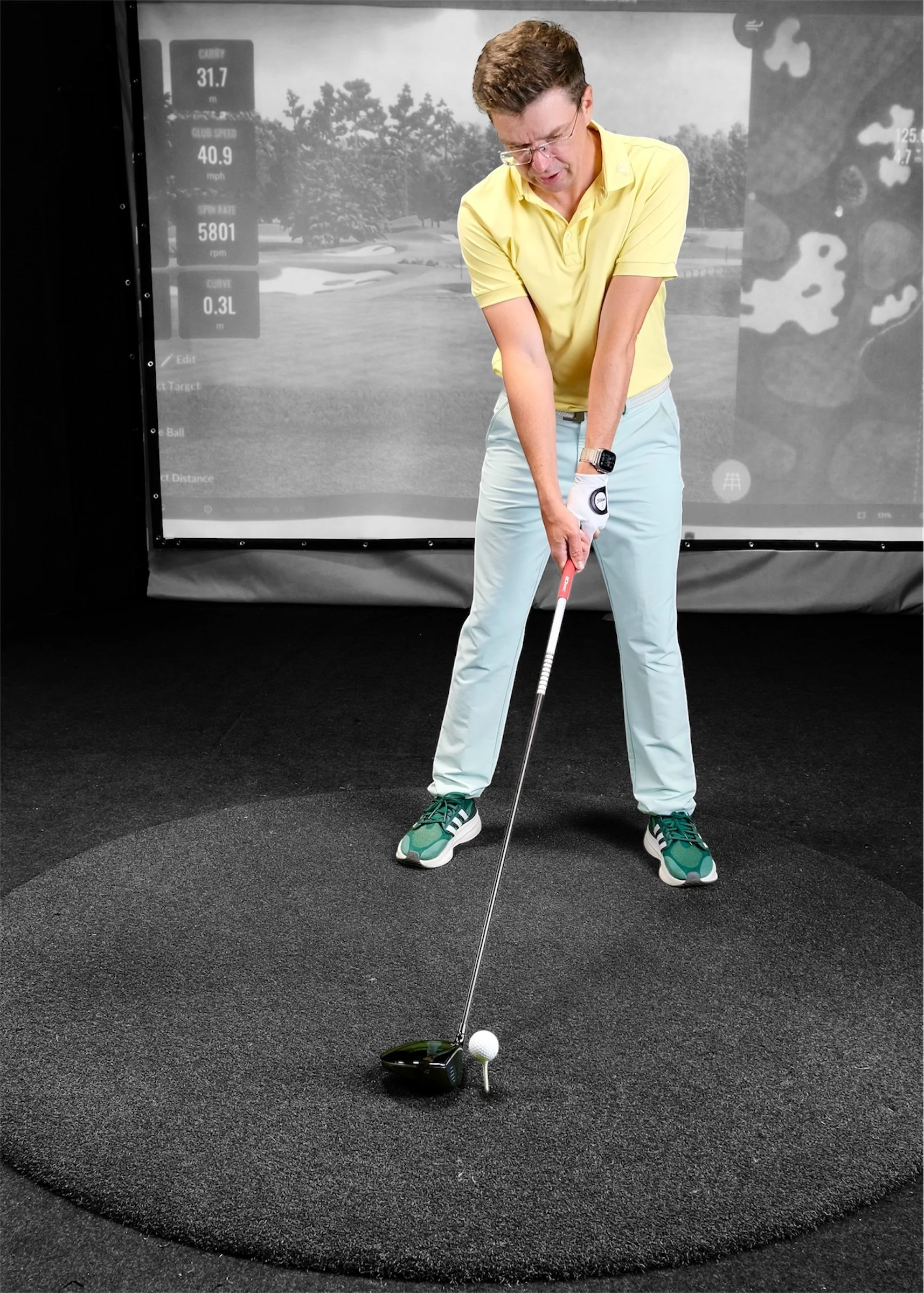
When thinking about distance, golfers try to hit the ball flat (if they hit high with a wedge, they hit low with a driver), which is why they place the ball too far toward the center or even closer to their right foot. Checkmate.
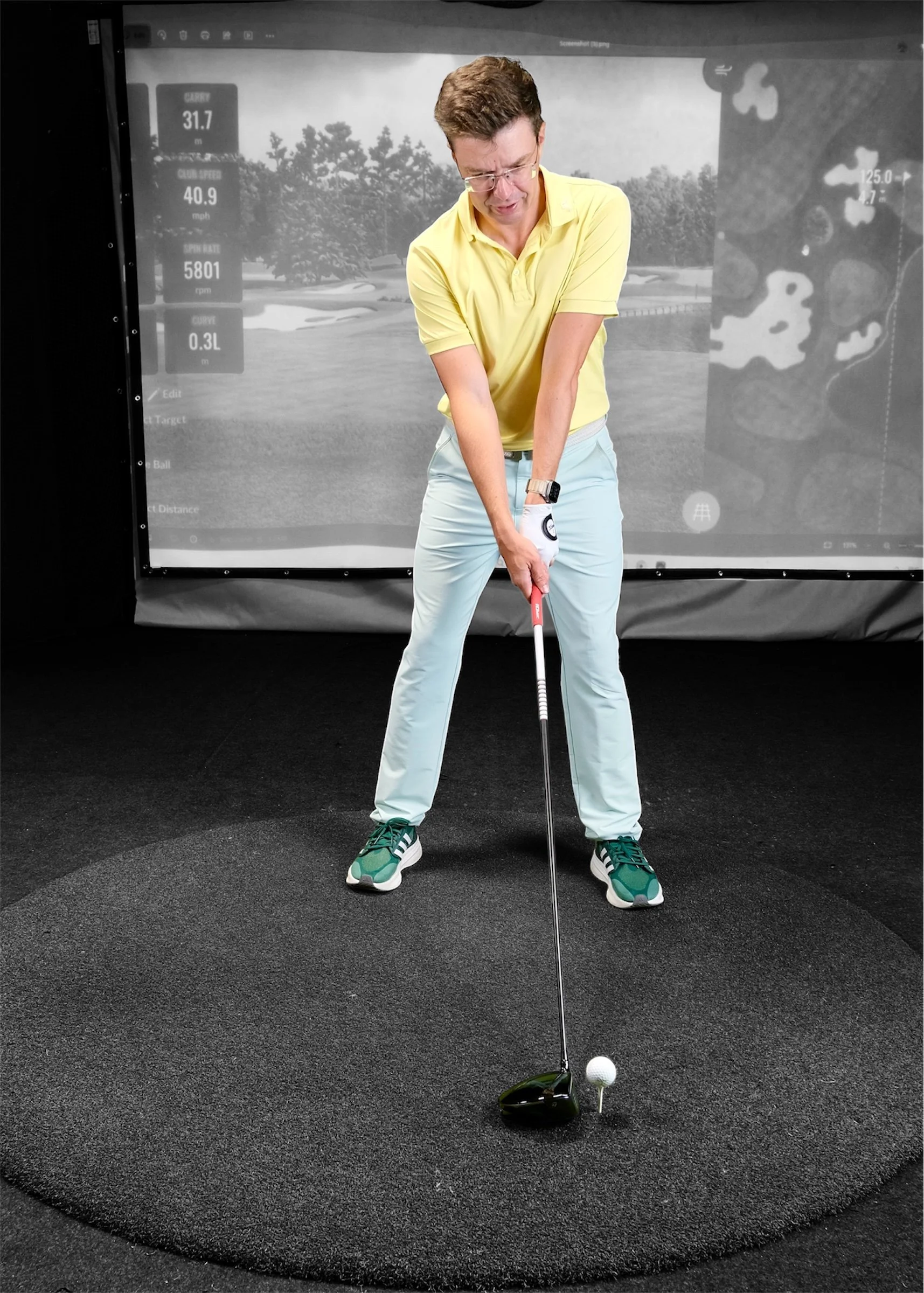
The ball should be positioned somewhere near your left heel to make it easier to hit it on the upswing.
Error #6: Driver - Negative Angle of Attack

The way your hands move has a huge impact on the angle of attack. If you pull them straight down, the clubhead will strike the ball at a steep angle.

Try to maintain the width of your swing; this will keep the clubhead moving parallel to the ground for longer and allow you to make contact at a positive angle of attack.
Exercise #1: Irony - Negative Angle of Attack

Place a towel a few centimeters in front of the ball—the goal is to hit the ball cleanly without moving the towel.
Exercise #2: Driver - Positive Angle of Attack

This time, place an empty pack of marbles behind the ball. You want to hit the ball and then go around the pack.
The angle of attack determines how the clubhead strikes the ball at the moment of impact, and thus determines the quality of contact and the efficiency of energy transfer. A proper attack angle ensures that iron shots are clean, consistent, and easy to control in terms of distance, while the driver allows you to achieve maximum distance and optimal flight height. Conscious management of the attack angle gives the golfer full control over the ball’s trajectory and greater precision in various conditions.
Watch the full video (15 minutes) to better understand what the angle of attack is.